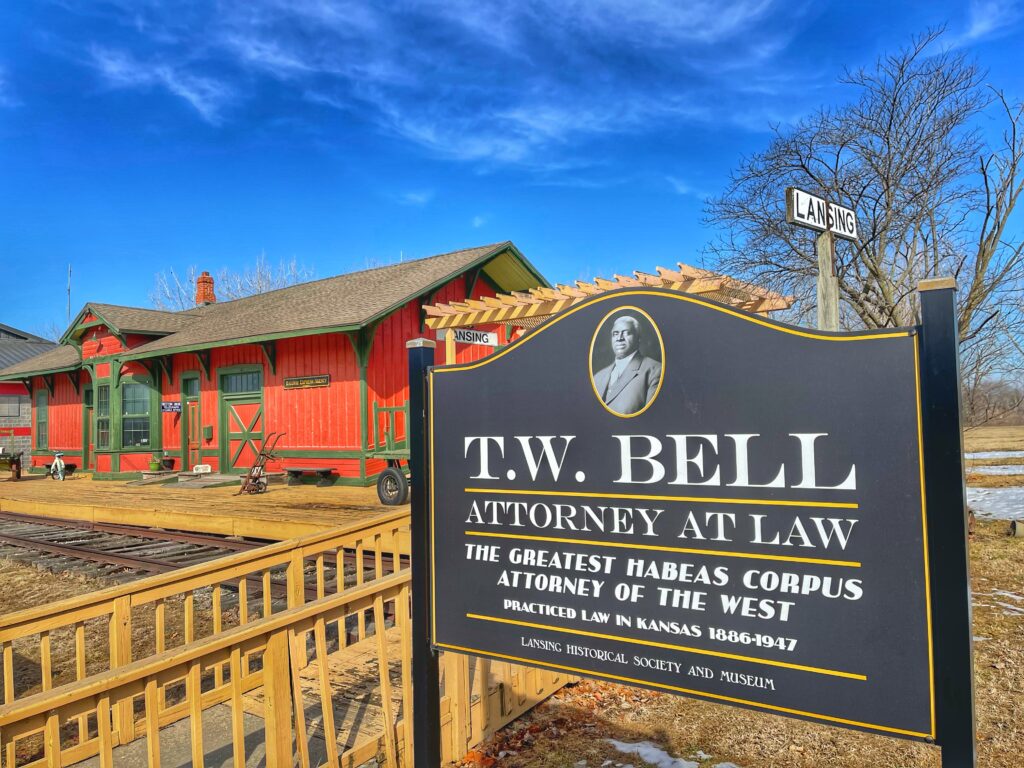
“Honorable Turner W. Bell, the greatest Habeas Corpus Lawyer of the West”

“Honorable Turner W. Bell, the greatest Habeas Corpus Lawyer of the West,” proclaimed the Kansas City Sun in an article covering Bell’s defense of three labor union dynamiters. The title would follow him throughout a remarkable 61-year legal career during which he handled more than 1,400 habeas corpus cases. Over the course of his practice, Bell appeared before courts of appeal in eight judicial districts, building a reputation that extended far beyond Kansas.

Turner William Bell was born into slavery on April 1, 1857, in Corinth, Mississippi, according to his death records. He was the second eldest of eleven children who survived to adulthood.

When the Civil War erupted, Corinth became a strategic focal point for both Union and Confederate forces. Two major rail lines intersected in the town’s center—the Memphis and Charleston Railroad, running east and west, and the Mobile and Ohio Railroad, running north and south—making it a crucial transportation hub.

Following the Battle of Corinth, Bell’s father, Peter Bell, gained his freedom. According to the Department of Iowa Grand Army of the Republic, Peter enlisted as a private in the 110th United States Colored Infantry and was mustered out of service in 1865. After the war, the Bell family relocated to Dallas County, Iowa.

They settled on a farm near Adel in a largely Quaker community where young Turner attended school. He excelled academically, graduating with honors from high school and later earning his law degree from Drake University. Bell made history as the first African American to be sworn into the Iowa Bar Association.

There are differing accounts of when Bell joined the Leavenworth County Bar. He first appears in the 1887 Leavenworth City Directory with a law office at 416 Delaware Street. However, several newspaper reports state that Judge William C. Hook swore him into the Leavenworth County Bar in 1886.

In the years that followed, Bell maintained offices at various downtown Leavenworth locations—several of which still stand today. From this professional base, Bell devoted himself to what he once referred to as his “hobby”: securing freedom for those unlawfully imprisoned. It is estimated that he helped free more than 1,500 individuals through writs of habeas corpus. Today, habeas corpus remains a fundamental legal tool used to restore liberty to individuals held in state or federal custody.

By 1915, Bell’s office was located in the prestigious Wulfekuhler Building, where he practiced alongside other attorneys. The city directory of that year lists him as the only “colored” attorney practicing law in Leavenworth.

In 1918, Bell joined the newly organized Kansas Defense Society as legal counsel. The society, formed to “test the constitutional rights of the race along civil, political and other lines that may be necessary to bring about justice and sentiment in behalf of the race in this country,” was reported in the Topeka Plaindealer on November 29, 1918.

The Kansas Defense Society emerged in response to the court-martial and execution of 19 soldiers from the 24th Infantry following the 1917 Houston Riots. A military court at Fort Sam Houston convicted 118 enlisted men; 63 were sentenced to life imprisonment at the Federal Penitentiary in Leavenworth. Bell filed a writ of habeas corpus before the United States Supreme Court, arguing that the court-martial proceedings did not comply with established military law and that the men were not performing soldierly duties at the time of the riot, nor was the nation formally at war. His arguments were reported in The Leavenworth Times on May 23, 1920.

Through the combined efforts of Bell and Congressman D.R. Anthony, Jr., of Leavenworth, the life sentences of these men were eventually commuted to terms of ten to fifteen years.

Bell married Elizabeth “Lizzie” Patterson in Leavenworth in January 1890. Lizzie became an active figure in social and political circles. In 1909, she was elected president of the State Federation of Colored Women’s Clubs, and in 1915 she served as a delegate to the Northwestern Federation of States for Colored Women in Chicago. Lizzie’s mother, Martha, lived with the Bells at 744 Kickapoo Street until her death in 1924 at the age of 100. In July 1920, The Leavenworth Times reported that Martha had walked from her home to the Leavenworth County Courthouse to register to vote following passage of the 19th Amendment, then walked home after resting—a powerful testament to civic determination.

Turner W. Bell continued practicing law well into advanced age, eventually becoming the oldest member of the Leavenworth County Bar. He died on August 25, 1948, at the age of 91, leaving behind a legacy defined by justice, constitutional advocacy, and an unwavering commitment to liberty.

The History of Kansas State Penitentiary

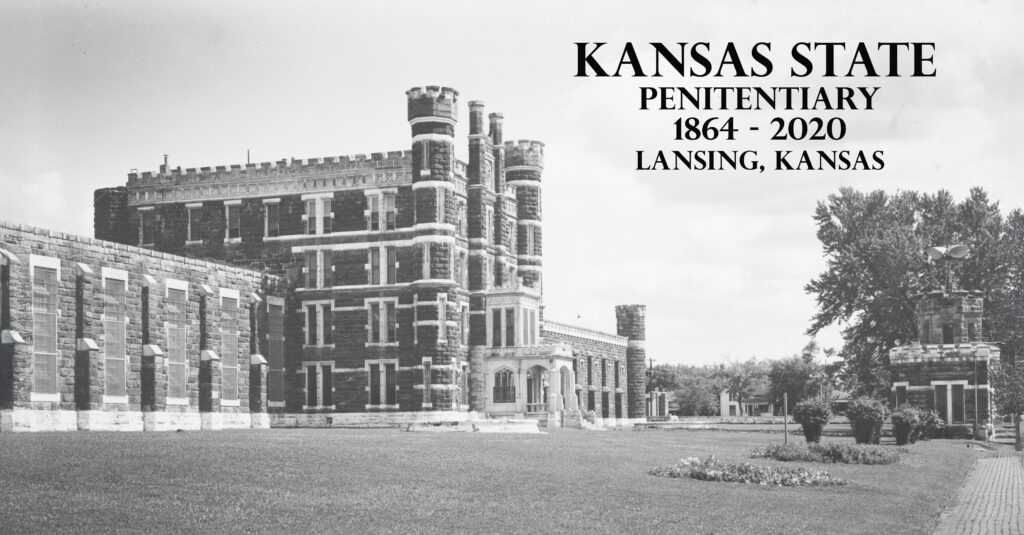
The Kansas State Penitentiary, established by the Kansas Territorial Legislature in 1859, is one of the nation’s oldest prisons and offers a remarkable opportunity to explore over 160 years of rich history. This historic site stands as a testament to the evolution of the American justice system. The compelling stories of those who lived and worked within its formidable walls are shared by former correctional officers, assistant wardens, wardens, and local historians.

Historical Significance:
The Kansas State Penitentiary is more than just a building; it symbolizes Kansas’ early statehood and the challenges of establishing law and order on the frontier. Opening shortly after Kansas became a state, this prison has witnessed significant events from the Civil War to the modern era, with each period leaving its mark on its history.

Architectural Marvel:
The prison’s imposing limestone structures, quarried and constructed by early inmates, reflect the craftsmanship of that era. As you walk the grounds, you can almost hear echoes of the past—the sound of hammers in the stone quarries, voices from the chow hall, and even the performances that once took place within its walls.

Personal Narratives:
The untold stories of inmates, staff, and their families provide a rich tapestry of experiences that highlight themes of rehabilitation, resilience, and human struggles. Educational programs often include personal accounts from former staff or historians who can elaborate on the complexities of life inside the prison. This aspect brings a personal touch to the factual history, making it more relatable and engaging.

Cultural Connections:
The facility is also a significant piece of cultural history, having hosted performances from iconic musicians, like Johnny Cash and his wife, June Carter Cash during the early 1970’s to hosting the annual “Behind the Walls” car show the last weekend in September.

Interactive Learning:
Guided tours by former correctional officers can offer engaging learning opportunities for students, history enthusiasts, and the general public. These experiences can include interactive exhibits, discussions, and even workshops that delve deeper into the societal implications of incarceration and reform.

Overall, the historic Kansas State Penitentiary stands as an educational resource, inviting reflection on justice, history, and human experience. It encourages visitors to engage thoughtfully with the complexities of the past while considering their relevance to contemporary issues.
The story of Ernest Aspinwall

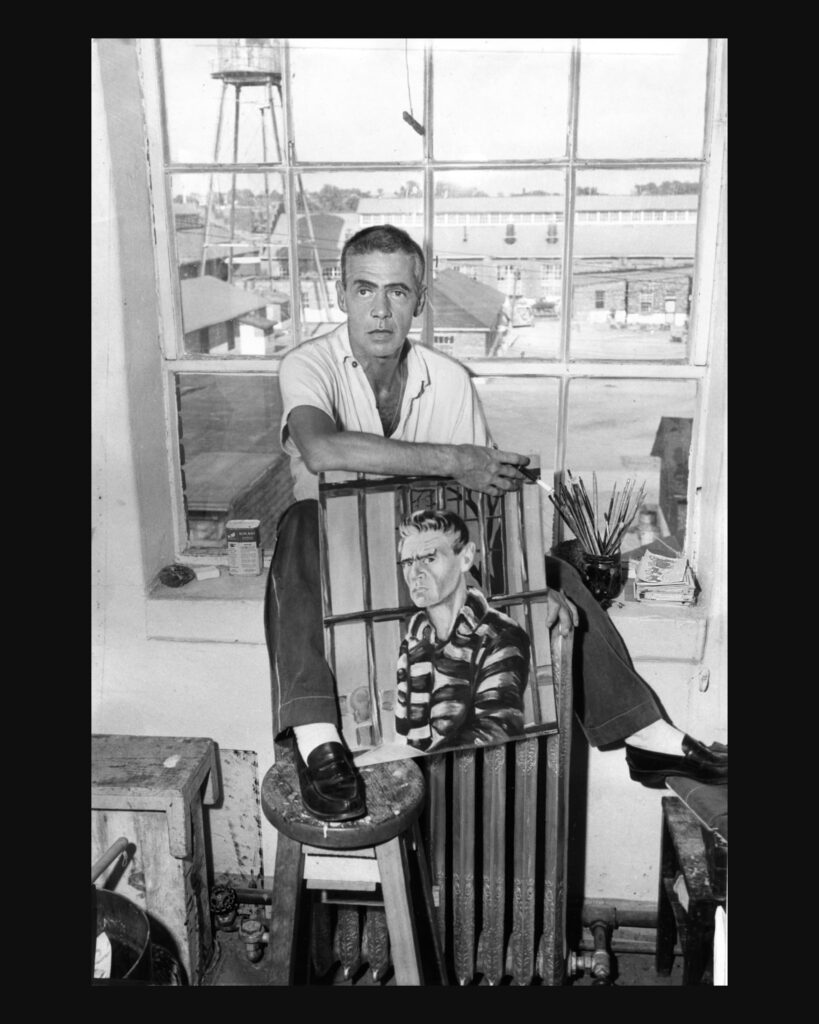
This photo of Ernest Aspinwall, taken in 1959 by a Kansas City Star photographer, captures a moment of recognition for Ernie and his incredible artistic talent. At the time, the Star was featuring a story about his life, his artwork, and the frescoes he painted in the auditorium of the Service Center building. In the background of the photo, the older penitentiary buildings are visible, including the building that housed Death Row. This historic view contrasts with the present use of the same space, which is now the site of the baseball field and recreation area.

Aspinwall’s sentences were commuted by the governor in 1959, and by 1969, Aspinwall was creating art as a street artist in San Francisco. Today many of his works are considered highly collectible.

This photo serves as a powerful reminder of Aspinwall’s story and the evolution of the penitentiary itself – preserving the past while acknowledging its transformation over time.

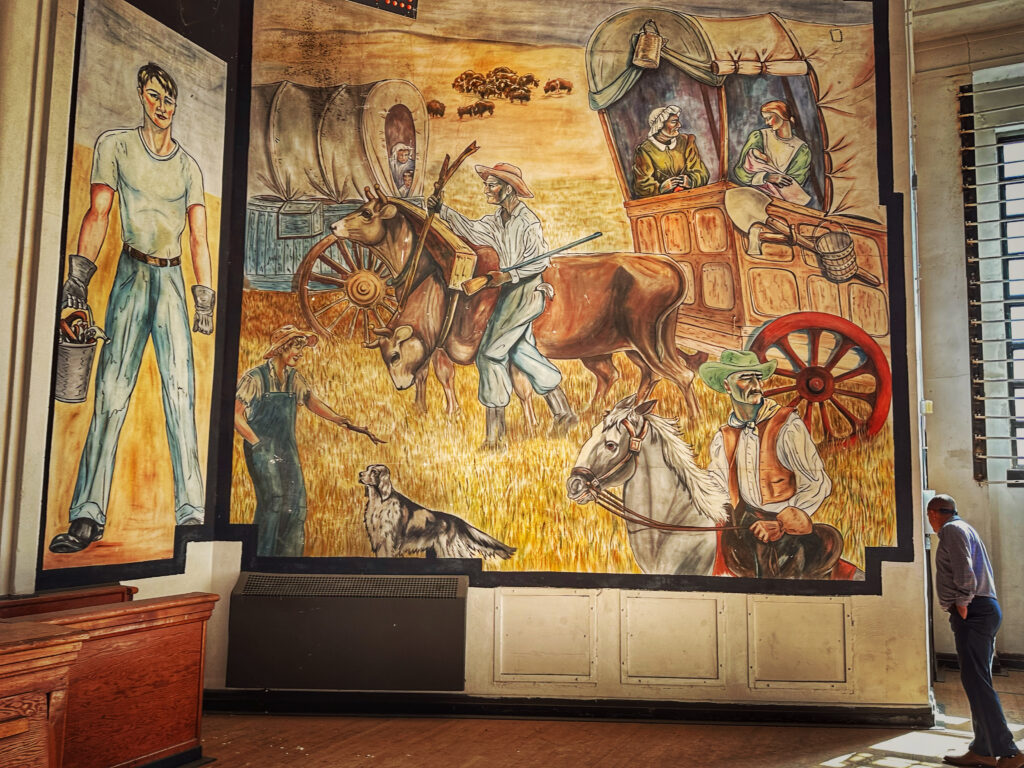
The Service Center Building, constructed in 1923, is an extraordinary part of the Kansas State Penitentiary’s legacy, showcasing stunning Art Deco design on both its exterior and the interior of its auditorium/gymnasium. This three-story brick building holds a deep historical and cultural significance.
One of its most notable features is the series of four frescoes painted by former inmate Ernest Aspinwall. Aspinwall, serving two life sentences as an habitual criminal, demonstrated remarkable artistic talent during his incarceration. The frescoes are remarkable depictions of early frontier life and the pioneers who settled in Kansas. Aspinwall was deeply dedicated to his craft, often spending months researching the subject matter of his art to ensure its authenticity and detail.
Aspinwall’s meticulous work reflects not only his artistic talent but also to his commitment to preserving history through art. These frescoes are more than just paintings on a wall, they are an irreplaceable record of Kansas’s frontier past, capturing the spirit of those who helped shape the state’s identity.

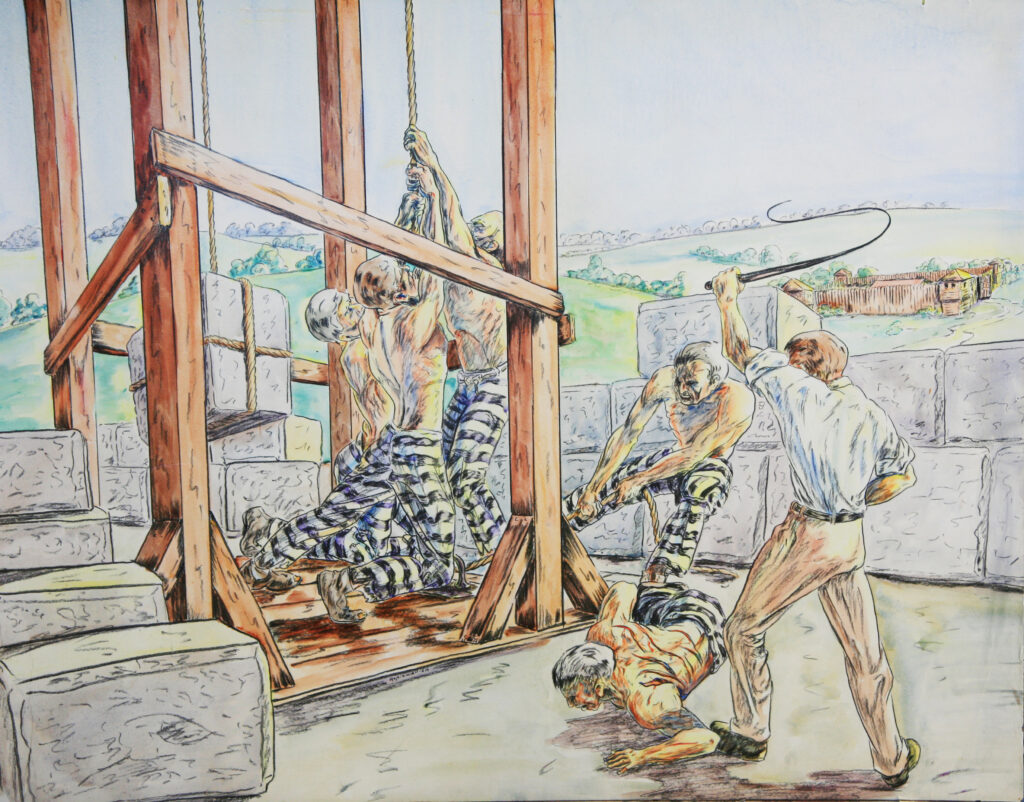
Aspinwall painted a series of 14 paintings depicting life inside the walls of Kansas State Penitentiary. They hang on the walls of the administration building at Lansing Correctional Facility today.